Essential Tools and Materials Every Modern Crafter Should Have in Their Studio
What It Means to Be a Modern Crafter
A modern crafter is someone who brings intention to their work — someone who respects the tradition behind a craft while adapting it to contemporary life. This isn't about producing things quickly or cheaply. It's about the relationship between maker, material, and process.
Crafting today spans an enormous range of disciplines: bookbinding, ceramics, fiber arts, papercraft, leatherwork, woodworking, textile design. What unites all of them is a commitment to making things by hand, with skill, and with purpose. That artisan mindset shapes every decision — including what tools you keep on your bench and where your materials come from.
This guide is written from that perspective. Not as a shopping list, but as a framework for building a practice that's both functional and meaningful.
The Foundational Hand Tools No Crafter Should Skip
Across almost every craft discipline, a small set of hand tools forms the core of daily work. These aren't optional extras — they're the instruments through which skill becomes visible in the finished piece.
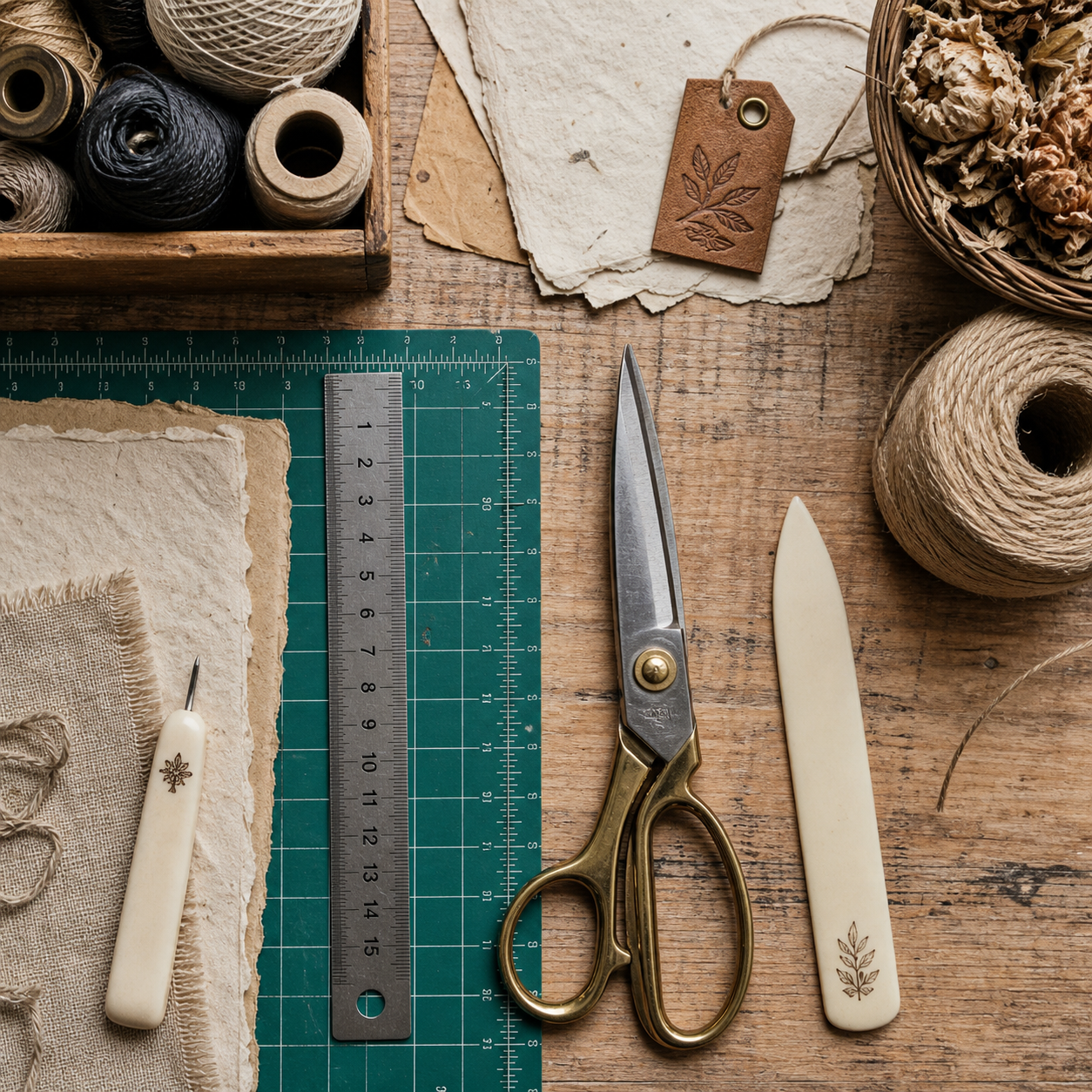
Scissors and cutting tools are the most obvious starting point, but quality matters more than people expect. A pair of dedicated fabric scissors or precision craft scissors — kept sharp and used only for their intended material — will outlast a dozen cheap alternatives and produce cleaner results from day one. For paper and card, a quality craft knife with replaceable blades is non-negotiable.
The bone folder is beloved by bookbinders and papercrafters but underused elsewhere. It creates crisp, clean folds without damaging fibers, and it's one of those tools that immediately reveals the difference between rushed work and careful work. Similarly, an awl — used for piercing, marking, and starting holes — shows up in leatherwork, bookbinding, and even some textile applications.
A self-healing cutting mat protects your workbench and extends the life of your blades. Get a larger one than you think you need. You'll use every inch of it.
The principle here is simple: buy fewer tools, but buy ones that will last. A well-made pair of scissors used for 15 years costs less per project than three cheap pairs replaced every few years — and they'll make you a better crafter in the process.
Choosing Materials That Honor Your Craft
The materials you work with are not just inputs — they are half the conversation. A bookbinder who uses acid-free paper and genuine linen thread is making something that will last a century. Someone using bargain-bin equivalents is making something that might not survive a decade.
Quality and sourcing are two distinct considerations, and both matter. Quality means choosing materials appropriate to the demands of the finished work: the right weight of paper, the correct gauge of wire, natural fibers that behave predictably. Sourcing means understanding where materials come from — whether that's supporting small-batch suppliers, choosing sustainably harvested wood, or avoiding synthetic materials when natural alternatives perform better.
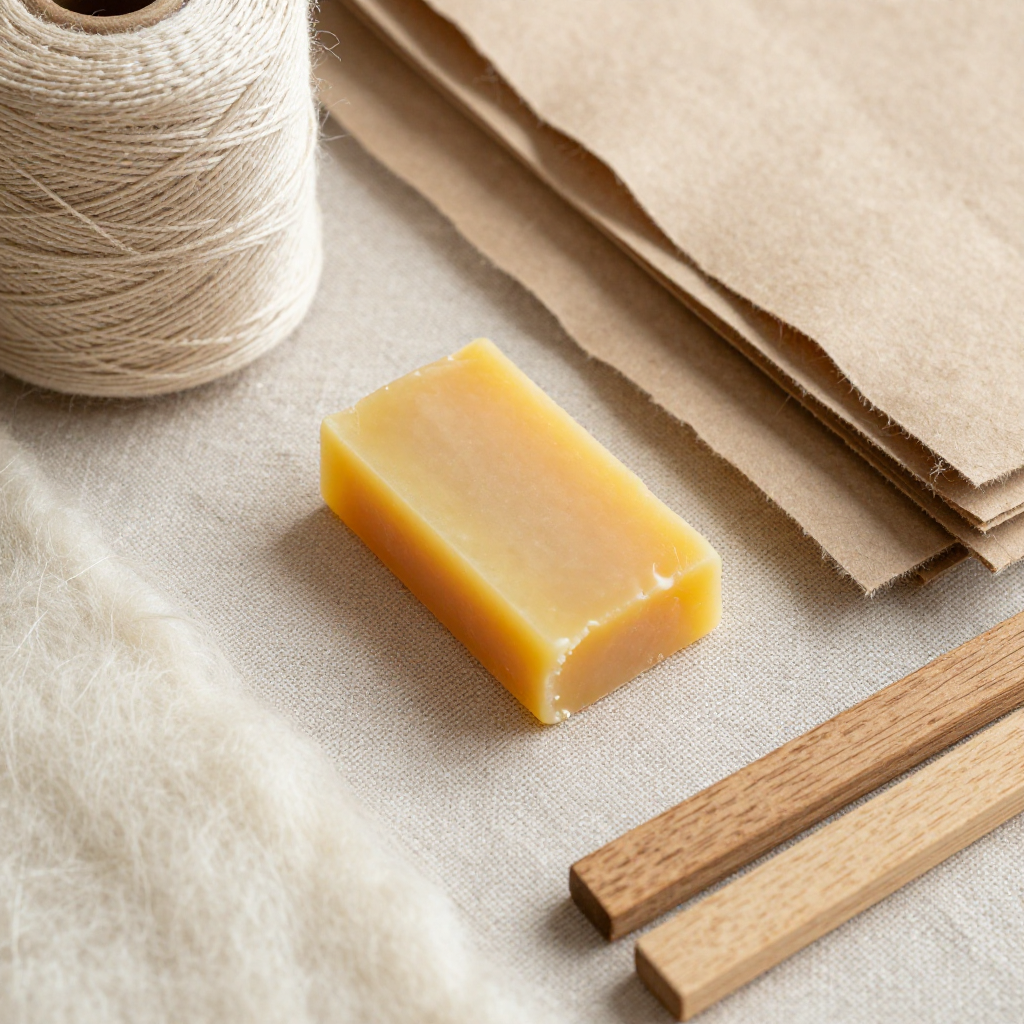
Sustainable and natural materials aren't just an ethical preference — they often perform better. Natural linen ages beautifully; many synthetics don't. Unbleached cotton holds dye differently than processed alternatives. These aren't abstract values; they show up in the finished work.
The artisan craft community has increasingly emphasized the importance of knowing your supply chain. Buying from specialist suppliers who can describe exactly what they're selling is worth the extra cost, especially for materials that are central to your practice.
Measuring, Marking, and Precision Tools
Precision tools are what separate work that looks handmade (in the best sense) from work that looks unfinished. A steel ruler, a reliable set square, and quality marking tools are the difference between a project that fits together and one that almost fits together.
A steel ruler is preferable to plastic or aluminum for most cutting tasks — it won't get nicked by a craft knife and stays accurate over time. For fabric and soft materials, a flexible tape measure combined with tailor's chalk or washable marking pens gives you the flexibility to work with irregular shapes.
Calipers are worth considering for any craft that involves precise dimensions — ceramics, woodworking, leatherwork. Even an inexpensive digital caliper removes guesswork from thickness measurements in a way that improves consistency noticeably.
One overlooked tool: a light box or tracing pad. For papercrafters, illustrators, and anyone who transfers patterns regularly, a good light box saves hours of frustrating guesswork and keeps transferred lines clean and accurate.
Adhesives, Fasteners, and Finishing Supplies
The connective materials in any craft project — adhesives, fasteners, and finishes — often determine whether a finished piece holds up or falls apart. Getting these right is as important as getting the primary materials right.
For paper and bookbinding work, PVA glue (polyvinyl acetate) is the standard for a reason: it dries flexible, is archival-quality when used correctly, and bonds paper and fabric reliably. Avoid using general-purpose white glue as a substitute — it behaves differently under stress and humidity.
In textile and fiber arts, thread quality and the right needle type matter as much as the fabric itself. Using the wrong needle for a material creates micro-tears that weaken seams over time. In leatherwork, saddle stitching with waxed linen thread is significantly stronger than machine stitching — a good example of where traditional technique outperforms the faster modern alternative.
Finishing supplies — wax, varnish, edge paint, beeswax — are often treated as afterthoughts, but they define how a piece ages. A well-finished leather edge or a properly burnished wooden surface isn't just aesthetic; it protects the work from wear and moisture.
Digital Tools That Complement — Not Replace — the Handmade Process
Digital tools have a legitimate place in a modern crafter's workflow, provided they serve the handmade process rather than shortcut it. Pattern-making software, grid planning apps, and digital mood boards can save significant time in the planning phase — time that gets reinvested in the actual making.
Apps like Adobe Illustrator or free alternatives like Inkscape are widely used for designing templates and patterns that are then printed and transferred by hand. For fiber artists, tools like Ravelry (for knitters and crocheters) or weaving draft software help visualize complex structures before committing yarn. These aren't replacements for craft knowledge — they're extensions of it.
The important distinction is between tools that support decision-making and tools that make decisions for you. A digital ruler or color-matching app helps you execute your vision more accurately. An AI-generated pattern that you print and follow without modification is a different thing entirely — and most artisan crafters recognize the difference instinctively.
Use digital tools to plan, organize, and visualize. Use your hands to make.
Organizing Your Craft Space for Flow and Creativity
A well-organized craft space isn't about tidiness for its own sake — it's about removing friction from the creative process. When tools are easy to find and materials are stored properly, you spend more time making and less time searching.
The most effective storage and organization systems are ones that match how you actually work, not how a Pinterest board suggests you should work. If you reach for your bone folder every session, it should be within arm's reach. If you use certain adhesives rarely, they can live in a drawer. The goal is a workflow where the physical environment supports rather than interrupts creative momentum.
A dedicated workbench or craft table — even a modest one — changes how you approach your practice. Having a space that's set up for work signals to your brain that it's time to make something. It also means you're not re-establishing your setup every time you sit down.
Proper material storage also protects your investment. Paper and card stock stored flat in a dry environment will last years. Fabric stored on rolls or folded neatly won't develop permanent creases. Adhesives stored at stable temperatures won't separate or degrade prematurely. These aren't complicated systems — they're habits that compound over time.
Frequently Asked Questions
What is the difference between craft tools for beginners versus experienced artisans?
Beginners benefit from versatile, mid-range tools that work across multiple applications while they develop preferences. Experienced artisans tend to invest in specialized, high-quality tools optimized for their specific discipline — a professional bookbinder's bone folder or a ceramicist's trimming tools are purpose-built in ways that general craft tools aren't. The shift happens gradually as your practice narrows and deepens.
How do I know when to invest in higher-quality materials?
Invest in quality when the material is central to the finished piece's durability, appearance, or function — and when you've developed enough skill to notice the difference. Spending on premium paper before you understand paper grain direction is premature. Spending on quality linen thread once you're doing regular bookbinding is money well spent. Let your skill level guide your material investment.
Are sustainable or natural materials better for artisan crafts?
Often, yes — but not universally. Natural materials tend to age more gracefully, respond more predictably to traditional techniques, and align with artisan values around longevity and ethics. However, some synthetic materials genuinely outperform natural alternatives in specific applications. The answer is: understand what you're using and why, rather than applying a blanket rule.
Can digital tools be used without losing the handmade feel?
Yes, when used in the planning and design phase rather than the making phase. Designing a pattern digitally and then cutting, assembling, and finishing entirely by hand produces work that is authentically handmade. The handmade quality lives in the execution, not the planning process.
How do I build a craft toolkit on a limited budget?
Start with the tools you'll use in every single session — a good cutting mat, a sharp knife or scissors, a steel ruler, and the adhesive appropriate to your craft. Buy these at the best quality you can afford. Everything else can wait. Avoid buying broad starter kits, which typically include several tools you'll never use and few you'll actually need. Build deliberately, one tool at a time, as your practice demands it.