Profiles of Influential Contemporary Artisans Shaping Craft Today
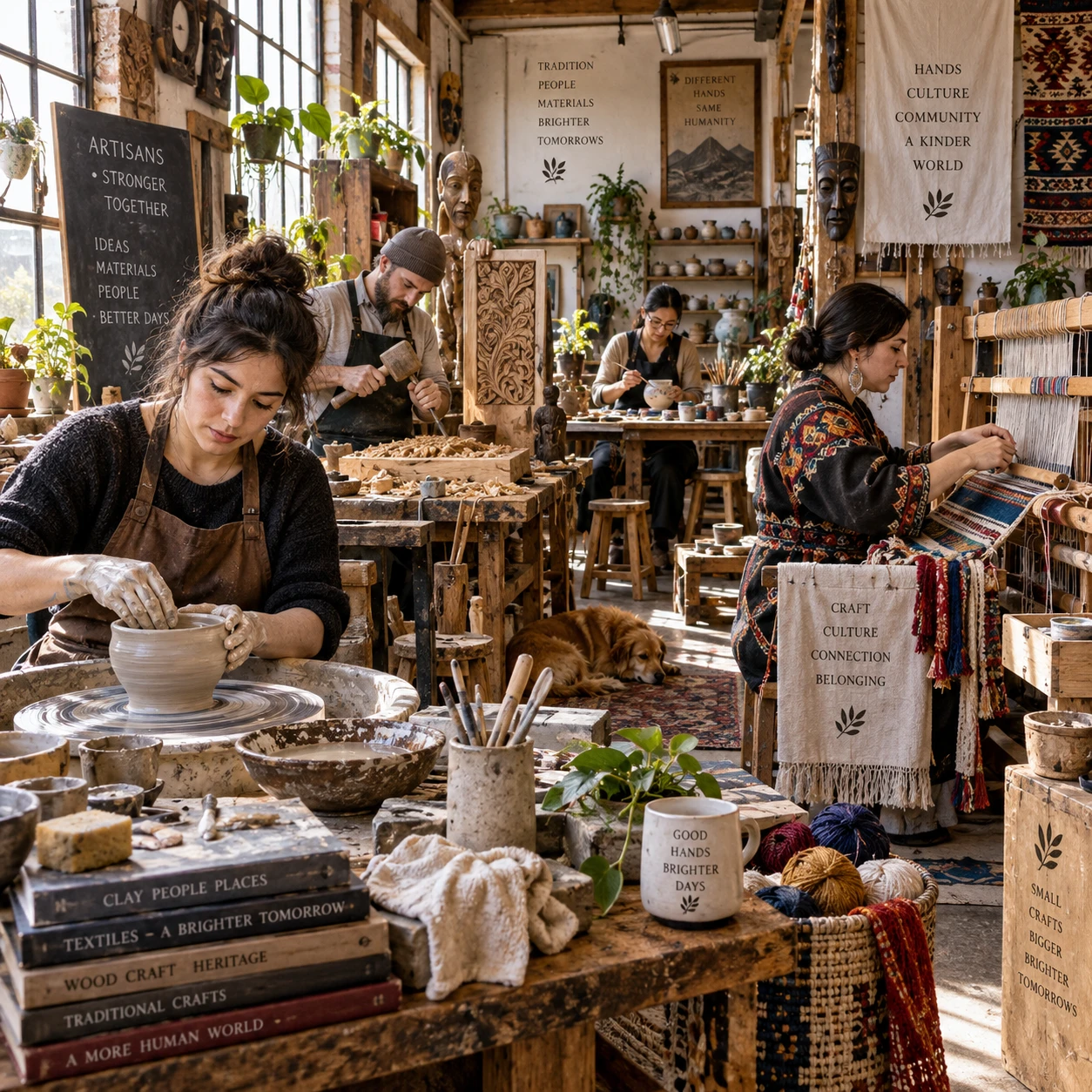
Contemporary artisans work across ceramics, textiles, wood, glass, metal, and other disciplines, carrying skilled traditions into the present. Their work can hold cultural memory, experiment with form, and support the communities where knowledge is learned and shared. The profiles below introduce six influential makers whose practices show how handcrafted work can respond to changing times without losing its grounding in material and technique.
What Makes an Artisan Influential Today?
An artisan is influential when skilled work changes how people understand a craft, sustains cultural knowledge, or creates meaningful opportunities for others. Influence can come through an object, a teaching practice, a community workshop, or a new way to use familiar materials.
That influence is not the same as popularity. A maker may shape a field through years of careful experimentation and mentorship, even without broad public recognition. To understand an artisan’s contribution, look at four connected measures: craft skill, cultural contribution, innovation, and community impact.
- Craft skill: Does the artisan demonstrate deep knowledge of materials and processes?
- Cultural contribution: Does the work preserve, reinterpret, or respectfully engage with a living tradition?
- Innovation: Does the maker bring a fresh idea to technique, form, or use?
- Community impact: Does the practice create ways for skills, income, or creative agency to reach others?
These measures need context. A technique may belong to a particular community, and a maker’s authority to use or share it matters. Influence is best understood through the artisan’s own background, relationships, and stated intentions, rather than through a striking object alone.
Craft Traditions Reimagined
Contemporary artisans reimagine craft traditions by adapting inherited skills to new forms, functions, and audiences. They may preserve a technique while changing the scale, palette, or setting in which it appears.
Tradition is not a fixed recipe. It changes through practice, teaching, trade, migration, and shifts in daily life. A basket maker might use a familiar coiling method to create a sculptural form, while a weaver could bring a regional pattern into garments designed for modern wear. The lineage remains visible, but the work speaks to the present.
British ceramic artist Edmund de Waal offers one example of tradition meeting contemporary ideas. Trained in ceramics, he is known for porcelain vessels and installations that place repeated forms in conversation with architecture, memory, and collections. His work demonstrates how a time-intensive material practice can move beyond a single functional object without abandoning the discipline of making.
Reinterpretation also calls for care. When a form carries religious, familial, or community meaning, using it without context can flatten that meaning into decoration. Responsible contemporary practice recognizes the people and histories connected to a technique, and makes room for them to define how it should be shared.
Materials, Methods, and Ideas
An artisan’s materials and methods shape both the appearance of a finished object and the ideas it can express. Clay, fiber, timber, glass, and metal each impose practical limits that makers learn to work with.
Material knowledge is built through repeated contact: testing a clay body, adjusting a loom’s tension, reading the grain of wood, or learning how glass responds to heat. These choices affect durability, texture, repair, and the time required to make each piece. They also influence what can be produced locally and which skills need to be passed on.
Textile artist and designer Sheila Hicks has explored fiber through weaving, knotting, and large-scale installations. Her work draws attention to color and the physical structure of thread. Fiber becomes more than a surface for pattern: it can occupy a room, bend around an architectural feature, or invite viewers to notice how many strands and decisions make up a whole.
Material decisions often involve trade-offs. A locally sourced fiber may connect a practice to place, but availability can limit color or volume. A durable finish can extend an object’s life, yet require additional materials or processing. Claims about sustainability deserve the same scrutiny as claims about skill: ask where materials come from, how work is produced, and whether the artisan can explain the choices involved.
Profiles Across Craft Disciplines
Influential contemporary artisans work in many disciplines, and their contributions are as varied as their materials. These profiles show how individual practices connect technique, personal vision, and wider cultural exchange.
Edmund de Waal: Porcelain and the language of repetition
De Waal’s porcelain vessels often appear in carefully arranged groups. Repetition, spacing, and quiet differences between forms give the work its rhythm. His installations connect studio ceramics to questions of history and memory, demonstrating how disciplined throwing and firing can support ideas that reach beyond the vessel itself.
Sheila Hicks: Fiber as sculpture
Hicks has worked with fiber across scales, from small woven pieces to expansive installations. Her practice treats color, texture, and the structure of thread as central artistic decisions. By working with textile techniques in sculptural settings, she has helped broaden public understanding of what weaving and fiber art can be.
El Anatsui: Reclaimed materials and collective labor
Ghanaian artist El Anatsui is known for large, flexible works assembled from discarded metal elements, including bottle caps. His studio practice involves assistants and sustained collaborative labor; the linked pieces can be hung and arranged in different ways. The results evoke textiles while inviting questions about consumption, reuse, history, and the movement of materials.
Grayson Perry: Ceramics and social observation
British artist Grayson Perry uses ceramics, tapestry, and other forms to examine class, identity, taste, and everyday life. His decorated pots draw on the vessel’s long history while confronting viewers with contemporary subjects. The contrast between traditional form and pointed imagery makes the work accessible without making its themes simple.
Joomchi makers: Korean paper craft in contemporary practice
Joomchi is a Korean paper-making technique in which wet hanji paper is worked by hand until its fibers bond into a textured, durable sheet. Contemporary practitioners, including artists who teach and exhibit the technique internationally, use the resulting material for sculptural and functional work. Its revival and adaptation show how a practice can gain new audiences when knowledge is actively taught and documented.
Potters and weavers sustaining local knowledge
Some of the most consequential artisans are less widely known: potters working with regional clays, weavers maintaining community patterns, or woodworkers teaching apprentices. Their impact may be measured through classes held, younger makers trained, or a local technique kept in active use. These forms of influence rarely fit a celebrity profile, but they are essential to craft’s continuity.
Craft’s Impact Beyond the Object
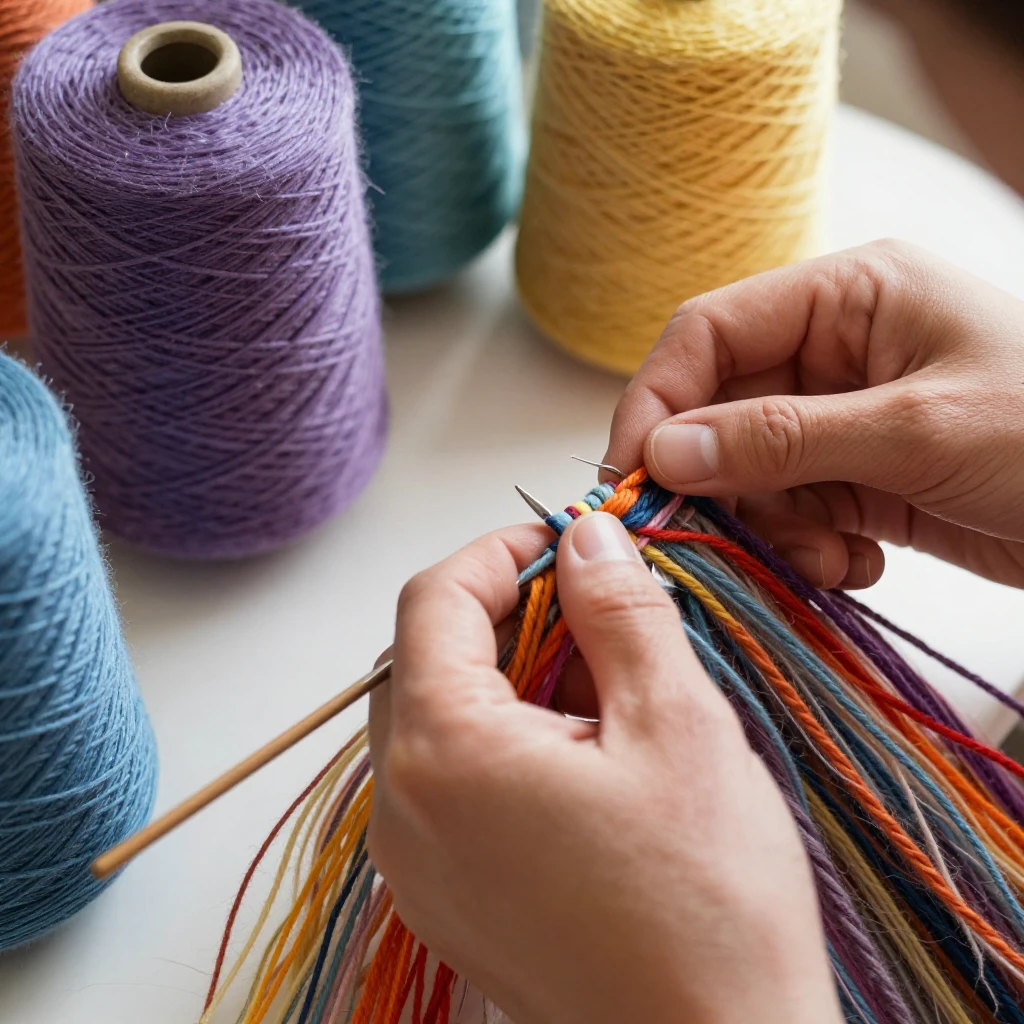
Artisan work affects more than the person who owns the finished object: it can carry cultural knowledge, strengthen local livelihoods, and model more attentive production. The scale and benefits vary by practice, so each claim should be grounded in how the work is actually made.
A handcrafted object often contains decisions that mass-produced goods hide: who prepared the material, which tools shaped it, and how long the process took. When artisans teach, collaborate, or share techniques with permission, they can help sustain a broader network of skills. Workshops and cooperatives may also provide paid work and a place for knowledge to move between generations.
Still, handmade does not automatically mean sustainable or fair. A craft practice can rely on imported materials, underpaid labor, or methods that are difficult to scale responsibly. Buyers and advocates should look for specific information about sourcing, working conditions, and community relationships instead of assuming that a handcrafted label answers every question.
For readers interested in safeguarding living heritage, UNESCO’s overview of the Convention for the Safeguarding of the Intangible Cultural Heritage explains why skills and knowledge matter alongside physical objects. That distinction is useful: preserving craft means supporting the people who practice and transmit it, not only collecting what they make.
Supporting Contemporary Artisans
You can support contemporary artisans by buying thoughtfully, learning the story and production context of a piece, and helping makers reach audiences on fair terms. Consistent, informed support is more useful than treating craft as a seasonal trend.
- Buy directly when possible: Shop from an artisan’s studio, cooperative, or clearly identified maker. Ask about materials, care, and the time involved.
- Pay fairly: Compare an item’s price with the labor and process it represents, rather than expecting handmade work to match mass-market pricing.
- Choose for long use: Consider repairability, durability, and whether you will use or value the object over time.
- Learn the context: Read the maker’s account of their practice. If a design draws on a specific culture, look for clear attribution and respectful collaboration.
- Support teaching and infrastructure: Attend demonstrations, fund community workshops, and advocate for access to studios, tools, and apprenticeships.
One common mistake is assuming that a low price always signals a good deal. It may instead hide unpaid labor or a lack of clear provenance. Another is describing all handmade objects as eco-friendly without checking their materials and production. Better questions are concrete: Who made this? Where did the materials come from? How was the maker paid? Can the object be repaired?
Supporting craft does not require buying something new. Sharing an artisan’s work with accurate credit, visiting an exhibition, or paying for a class can help sustain creative practice. The aim is to value the maker’s knowledge and conditions of work as much as the finished object.
Frequently Asked Questions
What distinguishes an artisan from other makers?
An artisan applies specialized skill and material knowledge to make or shape objects, often through a hands-on process. The term can cover many kinds of work; it does not by itself guarantee a particular level of training, quality, or ethical production.
How do contemporary artisans preserve craft traditions?
They preserve traditions by practicing, documenting, and teaching techniques, while adapting them where appropriate to present-day needs. Responsible adaptation acknowledges the people and cultural context connected to a practice.
How can consumers support artisan communities?
Consumers can buy directly, pay fair prices, attend workshops, and share makers’ stories with accurate attribution. Supporting community studios and apprenticeships can also help skills remain active across generations.
What role does sustainability play in contemporary craft?
Sustainability can shape material sourcing, production scale, repair, and the useful life of an object. Handmade production may offer close attention to materials, but its environmental and social impact depends on evidence about the full process.